Blogs

Accueil / Archives par catégorie " Blog "
Tout ce qu'il faut savoir sur ECOBRIDGE 
Chargement des bonbonnes de gaz pour cuisinière à gaz

Guide sur l'emballage et le chargement des cuisinières à gaz : 5 questions pour les importateurs

Guide sur l'emballage et le chargement des cuisinières à gaz : 5 questions que les importateurs devraient se poser L'emballage et le chargement des cuisinières à gaz peuvent avoir un impact direct sur le coût réel d'une commande internationale. Pour les importateurs, les distributeurs, les grossistes, les détaillants et les marques de distributeur, se contenter de comparer les prix unitaires départ usine ne suffit pas. Les dimensions des cartons, le nombre de pièces par carton, la protection des produits, l’orientation de l’emballage, l’utilisation de l’espace dans le conteneur, le poids brut et le mode d’assemblage peuvent tous influencer le coût final à l’arrivée. Deux cuisinières à gaz dont les prix départ usine sont similaires peuvent présenter des coûts d’expédition très différents si l’une d’elles nécessite nettement plus d’espace dans le conteneur. De même, réduire les matériaux d’emballage simplement pour réduire la taille du carton peut créer un autre problème : un risque accru de dommages liés au transport. Une bonne décision d’approvisionnement doit donc trouver un équilibre entre : la protection du produit, les dimensions du carton, l’efficacité du chargement, le coût du fret, la configuration du produit, la capacité d’assemblage locale, les exigences d’inspection et le coût final à l’arrivée. Ce guide de chargement des conteneurs de cuisinières à gaz répond à cinq questions pratiques que les importateurs doivent se poser avant de valider l’emballage et de réserver un envoi. Réponses rapides pour les importateurs de cuisinières à gaz Question de l’acheteur Réponse rapide Comment les cuisinières à gaz doivent-elles être emballées pour l’exportation ? L’emballage d’exportation doit protéger l’appareil pendant la manutention en usine, le chargement du conteneur, le transport maritime, l’entreposage et la distribution locale, tout en restant rentable. Combien de cuisinières à gaz tiennent dans un conteneur 20GP ou 40HQ ? Il n’y a pas de quantité universelle. Cela dépend des dimensions des cartons, du nombre de pièces par carton, de l’orientation de l’emballage, du type de conteneur, de l’utilisation de palettes, de la configuration du produit et des restrictions de chargement. La taille des cartons a-t-elle une incidence sur le coût à l’arrivée ? Oui. Un carton plus grand peut réduire le nombre d’unités par conteneur et augmenter le coût de fret par cuisinière, même si le prix unitaire en usine reste inchangé. Les acheteurs doivent-ils opter pour le CKD, le SKD ou le CBU ? Le format le plus adapté dépend des capacités d’assemblage locales, des droits de douane, du coût de la main-d’œuvre, des infrastructures de l’usine, du contrôle qualité, de la logistique et des exigences du marché de destination. Que faut-il vérifier avant le chargement du conteneur ? Vérifier la quantité finale, la taille des cartons, le poids brut, les marques d’expédition,

En savoir plus »
Guide sur les cuisinières à gaz OEM destiné aux importateurs et distributeurs de marques de distributeur

Guide sur les cuisinières à gaz OEM : 5 questions que les acheteurs de marques de distributeur devraient poser aux fabricants

OEM Gas Stove Guide: 5 Questions Private Label Buyers Should Ask Manufacturers An OEM gas stove project involves much more than placing a logo on an existing appliance. For importers, distributors, wholesalers, retailers, and private-label appliance brands, customization can affect product appearance, gas configuration, burners, controls, labels, packaging, compliance, production cost, minimum order quantity, and lead time. A buyer may start with an existing factory model, but the final commercial product can become significantly different once branding, components, packaging, market requirements, and technical specifications are added. For this reason, private-label buyers should define the complete project before approving mass production. This guide answers five important questions buyers should ask an OEM gas stove manufacturer before developing a private-label product. Quick Answers for OEM Gas Stove Buyers Buyer Question Quick Answer What can be customized on an OEM gas stove? Depending on the model and order quantity, customization may include logos, colors, panels, glass printing, knobs, burners, pan supports, labels, manuals, cartons, and selected components. What is the MOQ for a private-label gas stove? There is no universal MOQ. It depends on the base model, customization depth, packaging, component requirements, printing, tooling, and supplier minimums. How does sample approval work? The buyer defines the specification, reviews a sample, requests revisions where needed, and approves a final production reference before mass production. What affects OEM gas stove cost? Base model, materials, burners, valves, ignition, safety components, packaging, branding, tooling, certification, and order quantity can all affect cost. How long does an OEM gas stove project take? Lead time depends on whether the project uses an existing platform or deeper customization, plus sampling, tooling, compliance, packaging, and component availability. The key principle is simple: An OEM quotation should be based on the final approved specification, not only on the appearance of the base

En savoir plus »
certification des cuisinières à gaz

Guide de certification des cuisinières à gaz : 5 questions que les importateurs doivent se poser avant d'importer

Gas stove certification should be considered before mass production, not after finished appliances are packed and waiting for shipment. For importers, distributors, appliance wholesalers, retailers, and private-label brands, compliance is not simply a certificate supplied by a factory or a conformity mark printed on a product. The correct compliance route can depend on the destination country, appliance design, gas category, operating pressure, burner configuration, ignition system, safety functions, electrical components, applicable regulations, product labels, instructions, and the responsibilities of the economic operators involved. A gas stove suitable for one market should not automatically be assumed to meet the requirements of another. Likewise, documentation covering one model or configuration may not automatically apply to a modified OEM or private-label version. This gas stove certification guide answers five important questions importers should confirm before approving samples and placing bulk orders. Quick Answers for Gas Stove Importers Buyer Question Quick Answer What certifications are required for gas stoves? Requirements depend on the destination market, product configuration, gas specification, applicable regulations, and required conformity-assessment route. Are certification requirements the same worldwide? No. Markets can have different gas conditions, product rules, standards, markings, testing requirements, labels, and documentation. Is factory certification the same as product certification? No. Factory management or audit certificates do not automatically certify a specific gas stove model for a destination market. When should certification be confirmed? Ideally during product selection and sample development, before components, packaging, and mass production are finalized. What documents should importers check? Depending on the market, buyers may need to verify certificates, test reports, declarations, technical documents, labels, manuals, and inspection records. These questions help buyers move away from asking: “Do you have certification?” and toward the more useful question: “What compliance requirements apply to this exact gas stove in my destination market?” 1. What Certifications Are

En savoir plus »
contrôle qualité des cuisinières à gaz

Guide de contrôle qualité des cuisinières à gaz : 5 questions pour les importateurs

Gas Stove Quality Control Guide: 5 Questions Importers Should Ask Before Shipment Gas stove quality control should begin long before a container is ready for shipment. For importers, distributors, wholesalers, retailers, and private-label brands, quality control is not simply a final visual inspection. A gas cooking appliance combines gas-carrying components, burners, valves, ignition systems, controls, pan supports, body materials, labels, packaging, and market-specific requirements. A product may look acceptable while still having problems involving gas tightness, ignition reliability, flame stability, component consistency, labeling, or packaging. For this reason, buyers sourcing from a gas stove manufacturer should establish inspection requirements before mass production begins. This gas stove quality control guide answers five important questions importers should ask before approving a shipment. Quick Answers for Gas Stove Importers Quality Control Question Quick Answer What should a gas stove inspection cover? Check product specification, gas system, ignition, flame performance, components, workmanship, labels, accessories, and packaging. How should gas leakage be checked? Gas-carrying components and connections should be tested according to the applicable product specification and market requirements. How should ignition and flame performance be evaluated? Verify consistent ignition, flame stability, burner operation, control adjustment, and other requirements defined for the approved model. How can mass production match the approved sample? Use a golden sample, final specification, approved bill of materials, change-control process, and documented inspection criteria. Is pre-shipment inspection necessary? It is often valuable for bulk or customized orders because it provides another checkpoint before balance payment and shipment. 1. What Should Be Included in a Gas Stove Quality Inspection? A gas stove quality inspection should evaluate the complete approved product, including appearance, dimensions, materials, gas-related components, ignition, flame performance, controls, pan supports, markings, accessories, packaging, and any market-specific requirements. Inspection criteria should be agreed before mass production rather than created after the

En savoir plus »
Guide d'achat des cuisinières à gaz

Guide d'approvisionnement en cuisinières à gaz : 5 questions pour les importateurs

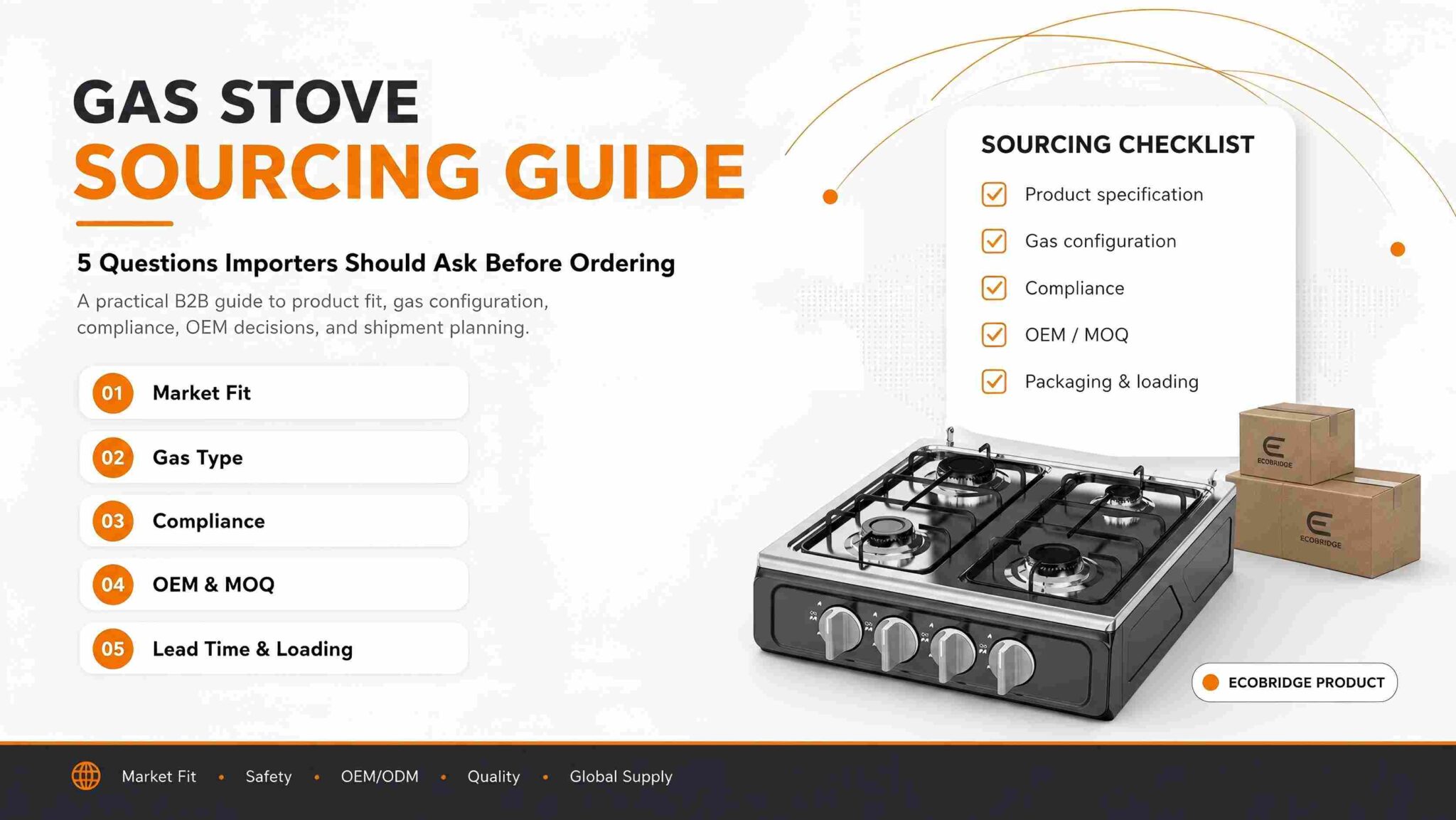
Gas Stove Sourcing Guide: 5 Questions Importers Should Ask Before Ordering Sourcing gas stoves for wholesale is not simply about finding a model, comparing factory prices, and placing an order. For importers, distributors, appliance wholesalers, retailers, and private-label brands, the right gas stove depends on several factors: the destination market, gas type, burner configuration, product positioning, local requirements, customization needs, packaging, production lead time, and container efficiency. A gas stove that works well in one market may require a different configuration for another country. Even two products that look almost identical can differ in burner systems, gas pressure requirements, valves, ignition components, materials, packaging, testing requirements, and production cost. This gas stove sourcing guide answers five important questions wholesale buyers should discuss with a manufacturer before approving samples or placing a bulk order. Quick Answers for Gas Stove Importers Question Quick Answer How do I choose the right gas stove? Start with the destination country, target customer, gas type, burner quantity, materials, features, and retail price positioning. Should I choose LPG or natural gas? Confirm the gas supply and operating requirements of the destination market before approving production. What certifications and tests are required? Requirements vary by country and product configuration. Confirm applicable regulations, testing, labeling, and documentation before mass production. Can gas stoves be customized for my brand? Yes. OEM projects can include logos, packaging, colors, panels, knobs, labels, manuals, burner configurations, and other product details. What should I confirm before placing a bulk order? Confirm MOQ, samples, final specifications, lead time, packaging, inspection requirements, carton dimensions, and container-loading quantity. These five questions provide a more reliable way to compare gas stove manufacturers than looking at unit price alone. 1. How Do I Choose the Right Gas Stove Specification for My Market? The right gas stove should be selected

En savoir plus »
Prix de gros des cuisinières à gaz

Prix de gros des cuisinières à gaz : quels sont les facteurs qui déterminent le prix départ usine ?

WHOLESALE BUYER’S COST GUIDE Gas Stove Wholesale Price: What Determines the Factory Cost? Why can two gas stoves that look similar have very different factory quotations? Burners, materials, valves, ignition systems, packaging, quality requirements and purchasing volume can all change the final manufacturing cost. This guide explains the major factors behind Gas Stove Wholesale Price so importers, distributors and private-label brands can compare quotations more accurately. Quick Buyer Takeaway There is no single standard wholesale price for a gas stove. A meaningful quotation must be connected to a specific product configuration. When comparing suppliers, make sure burner systems, surface materials, grates, valves, ignition systems, dimensions, packaging and quality requirements are equivalent. Main Cost Drivers Burner system Panel material Pan supports Valves and ignition Product dimensions OEM customization Order quantity Gas Stove Wholesale Price Is More Than a Burner Count Buyers sometimes ask for the price of a “two burner gas stove” or “four burner gas stove” without providing further specifications. However, burner quantity alone does not define the product. Two four-burner gas stoves can use completely different materials and components. One may use a basic steel panel and lightweight supports, while another uses tempered glass, heavier grates, upgraded burners and higher-positioned control components. Professional wholesale sourcing should therefore compare the complete product configuration, not only the unit price. Burners Type, size, power and quantity Surface Steel, stainless steel or glass Components Valves, knobs and ignition Customization Branding, colors and packaging Quality Testing and inspection Volume MOQ and order quantity 1. Burner Type and Quantity Burners are one of the most important cost components in a gas stove. However, price is determined by more than simply whether a stove has two, four or five burners. Burner quantity Burner size Burner material Single-ring or multi-ring design Heat-output requirements Burner cap construction Burner

En savoir plus »

Fabrication de cuisinières à gaz en OEM : guide complet destiné aux marques en marque blanche

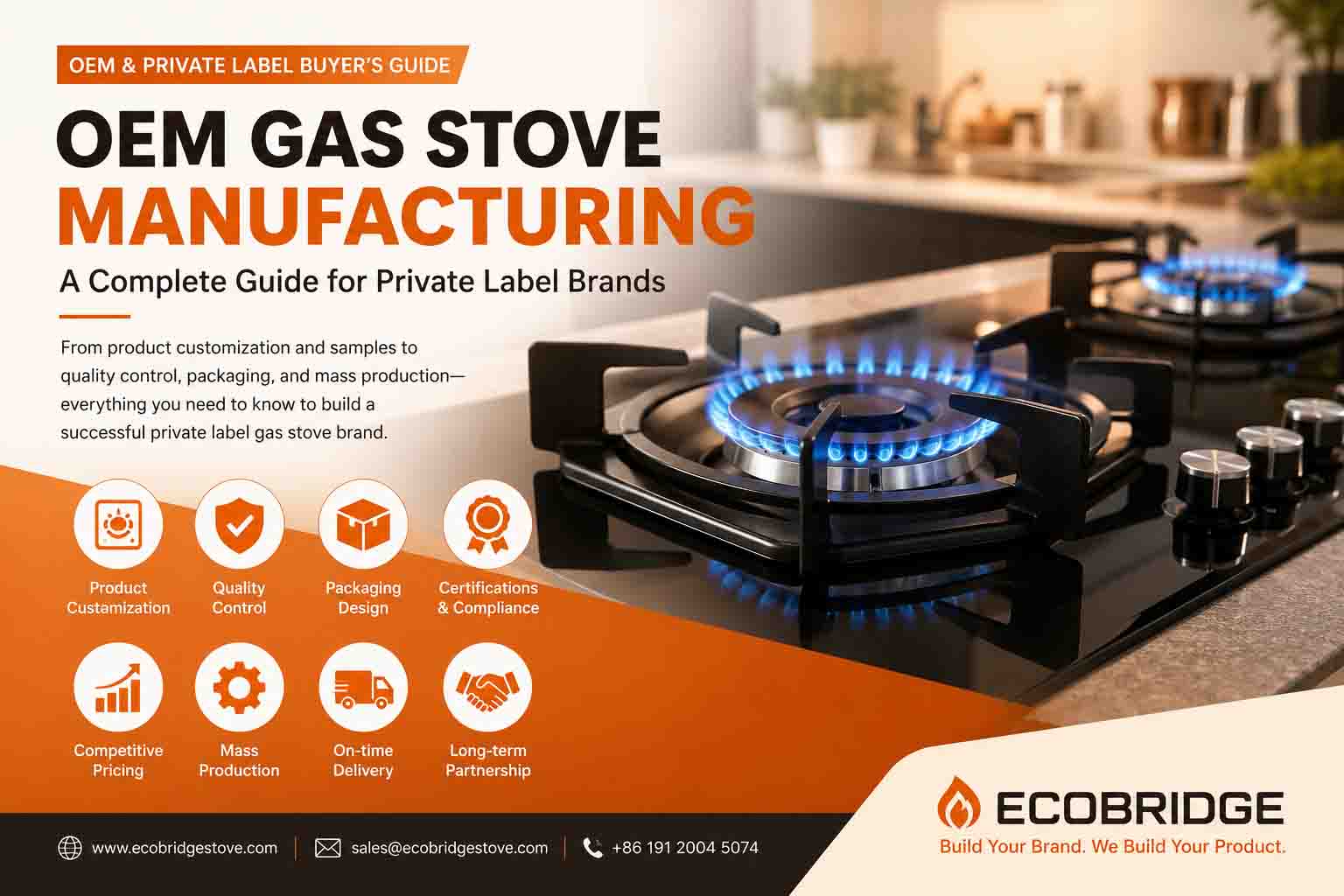
OEM & PRIVATE LABEL BUYER’S GUIDE OEM Gas Stove Manufacturing: A Complete Guide for Private Label Brands Launching a private-label gas stove brand involves much more than placing your logo on an existing appliance. Burner configuration, gas type, panel material, ignition system, packaging, certification and quality control can all influence whether the finished product fits your target market. For importers, distributors, wholesalers and appliance brands, understanding the OEM Gas Stove Manufacturing process before placing a bulk order can reduce sourcing risks, shorten development time and improve communication with the factory. Quick Buyer Takeaway A successful OEM gas stove project starts with the target market rather than the logo. Before requesting a quotation, define the destination country, gas type, burner configuration, target price, certification requirements and expected purchasing volume. Once these points are clear, the manufacturer can recommend a suitable production platform and determine which customizations are commercially realistic. Prepare Before Contacting a Factory Destination market LPG or natural gas Burner quantity Target price Expected order volume Required certification Private-label requirements What Is OEM Gas Stove Manufacturing? OEM stands for Original Equipment Manufacturing. In an OEM project, a manufacturer produces gas stoves according to specifications agreed with an importer, distributor, retailer or private-label appliance brand. The finished products are then sold under the buyer’s own brand. OEM development can range from simple branding changes to deeper product customization. For example, a buyer may select an existing model and customize only the logo, carton and instruction manual. Another buyer may request different burners, knobs, pan supports, panel materials, ignition systems, gas configurations or surface finishes. Therefore, OEM Gas Stove Manufacturing should be treated as a complete sourcing and product-development process rather than simply a logo-printing service. Branding Logo, labels, manuals and cartons Components Burners, knobs and pan supports Appearance Glass, stainless steel

En savoir plus »
Cuisinières à gaz CKD vs CBU

Cuisinières à gaz CKD vs CBU : comment réduire les droits de douane à l'importation en Amérique du Sud

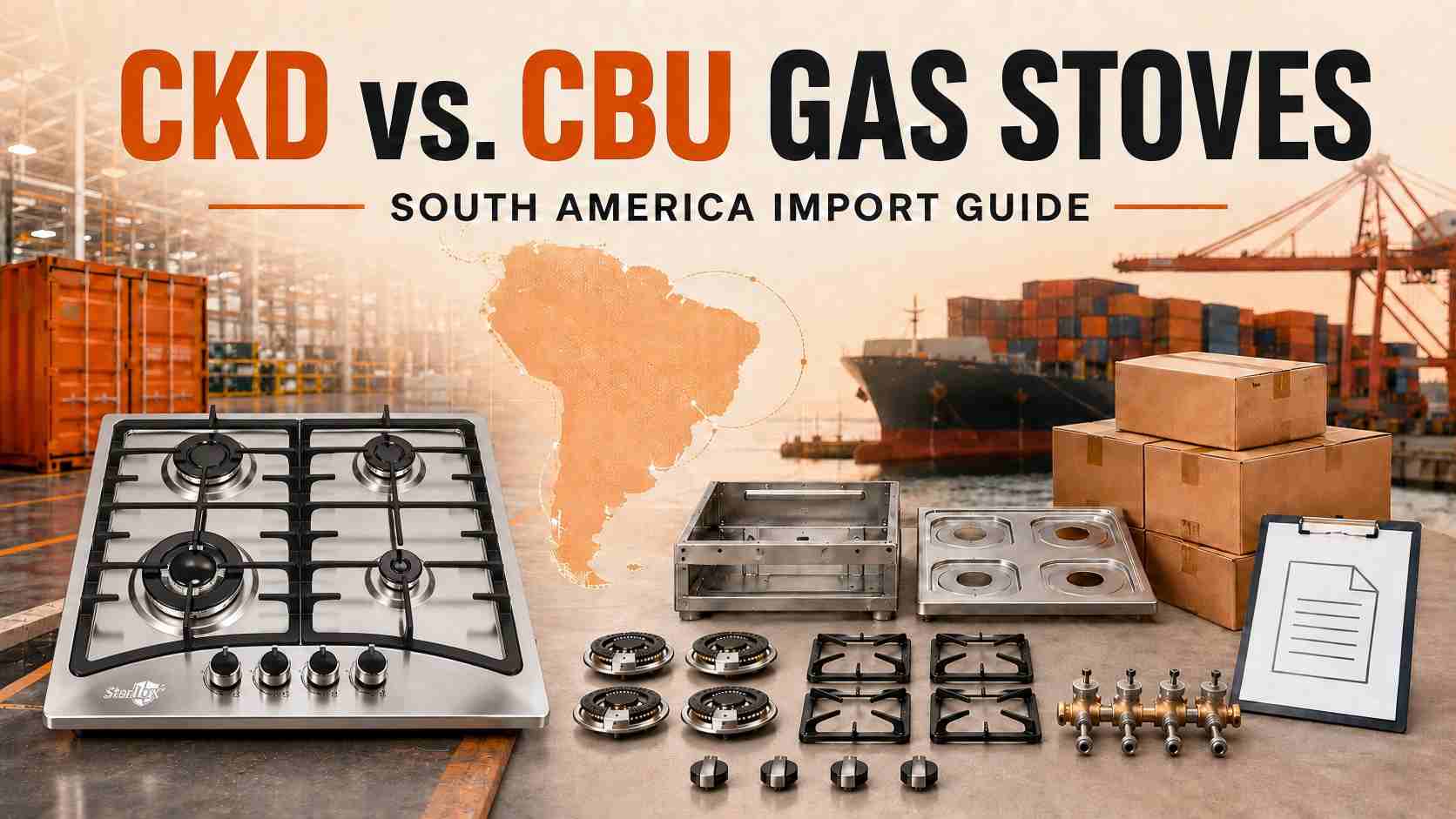
South America Import Strategy · Updated August 2026 The lowest factory price does not always produce the lowest landed cost. Choosing CBU, SKD, or CKD depends on classification, origin, local assembly, taxes, freight, and compliance. For gas stove importers, CKD vs CBU gas stoves may look like a simple tariff decision. In practice, South America is not one customs market, and CKD does not automatically receive a lower duty rate. At EcoBridge, we manufacture OEM and ODM gas stoves for international brands and distributors. This guide explains how to compare the formats and build a compliant import plan. Always confirm the final code, origin rule, and taxes with the destination customs authority or a licensed broker. The central customs rule A shipment does not become “parts” only because the stove is unassembled. Under the World Customs Organization’s General Interpretative Rule 2(a), a complete article presented unassembled or disassembled can be classified in the same heading as the assembled article. CKD vs CBU Gas Stoves: What Do the Terms Mean? CBU, SKD, and CKD describe how products leave the factory. They are logistics terms—not tariff codes. Customs classification depends on the goods as presented, Harmonized System rules, national schedules, and supporting documents. Format How It Is Supplied Local Work Required Main Customs Question Typical Fit CBU Complete Built-Up stove, assembled and factory tested Inspection, labeling, and distribution Finished-product code, origin, and applicable preference Fast market entry, lower volume, limited local production SKD Semi Knocked-Down modules, such as body, top panel, and burner system Module assembly, connection, leak and function testing Does the shipment already have the essential character of a stove? A staged move toward local assembly CKD Complete Knocked-Down components for local assembly Assembly, gas and electrical tests, final QC, and packing Are these genuine separately classified parts, or an

En savoir plus »
importer des cuisinières à gaz de Chine

Comment importer des cuisinières à gaz depuis la Chine : guide complet à l'intention des importateurs

China offers importers a broad choice of gas stoves, flexible OEM options, and scalable production. However, a successful order depends on much more than finding the lowest unit price. To import gas stoves from China successfully, buyers must define market-specific requirements, verify compliance, control production, and plan customs clearance before placing a deposit. This guide covers the process for importers and private-label brands. Import Roadmap 01 Define specifications 02 Confirm compliance 03 Verify the factory 04 Approve a sample 05 Lock the contract 06 Inspect production 07 Ship and clear customs 08 Manage after-sales 1. Define Specifications Before You Import Gas Stoves from China Start with the destination market, not the supplier catalog. Gas types, supply pressures, installation methods, electrical systems, and consumer preferences vary by country. A model that works in one market may be unsafe or non-compliant in another. Your request for quotation should specify: Freestanding range, built-in cooktop, tabletop stove, or portable model LPG, natural gas, or approved conversion configuration Local gas category, inlet pressure, injector size, and required heat input Number and type of burners, ignition system, and flame-failure protection Panel material, pan supports, knobs, dimensions, voltage, plug, and power cord Branding, manuals, labels, retail packaging, carton strength, and spare parts Practical rule: Never ask only for “a four-burner gas stove.” A complete specification sheet prevents incorrect quotations, expensive redesigns, and certification delays. 2. Confirm Safety and Market Compliance Before Ordering Importers remain responsible for placing compliant products on their market. Therefore, confirm the applicable laws, standards, conformity assessment, labels, documentation, and local-language instructions before sample approval. Market Key Starting Point Importer Action European Union Regulation (EU) 2016/426 on appliances burning gaseous fuels; third-party conformity assessment and CE marking Verify the notified-body certificates, model identification, EU Declaration of Conformity, technical documentation, traceability labels, and required language

En savoir plus »