Packaging & Logistics

Home / Blog / Packaging & Logistics

Packaging specifications, carton protection, container loading, shipping preparation and logistics decisions that affect landed cost and repeat-order reliability.

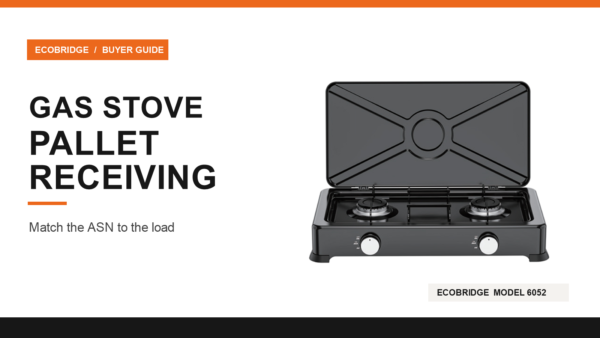
ECOBRIDGE Model 6052 black tabletop gas stove with two burners, a raised embossed lid and two white-faced front controls.

Gas Stove Pallet Receiving: When the ASN and Load Disagree

A pallet arrives with five gas stove cartons. The advance shipment notice also lists five. The pallet label scans, but one carton contains a different stove model from the one the warehouse expected. Posting the pallet as complete would put stock on the wrong item and leave a real shortage hidden behind a matching carton total. For gas stove pallet receiving, compare the order, the shipment notice and the physical cases before confirming stock. If they disagree, record the difference by item and unit of measure. Keep confirmed, held and missing quantities separate so the supplier and warehouse can resolve the exception without losing the original count. Use the scan to find the shipment The purchase order (PO) says what the buyer expects. The advance shipment notice (ASN), also called a despatch advice, says what the supplier reports sending on that shipment. The physical count says what reached the dock. Preserve those as three observations. If the supplier sends an amended ASN, keep its revision alongside the one the receiver originally saw. In a GS1 workflow, a Serial Shipping Container Code (SSCC) identifies an individual logistics unit, such as a particular loaded pallet. The receiving system can use it to find the shipment data linked to that pallet. A GTIN, where used, identifies a trade item at the relevant packaging level. When a pallet is mixed and is itself only a logistics unit, the GS1 Logistic Label Guideline describes linking the item detail electronically to the SSCC. The GS1 overview of logistics unit identification explains the same distinction from the scan side. Ask the receiver what happens after scanning. In one setup the scan opens an ASN for inspection. In another it can trigger receipt, depending on the system and the supplier agreement. The GS1 guideline describes both acceptance from

Read More »
Gas stove courier quote guide with the original ECOBRIDGE Model 6002LB two-burner cooker and raised black lid.

Gas Stove Courier Weight: How to Check a Quote

Before accepting a gas stove courier quote, identify the actual shipping parcel, compare its gross and dimensional weight, and apply the service’s measurement and rounding rules. A supplier’s net-weight entry or a carton quantity is not enough to establish the weight the courier will bill. This matters when importers and distributors send samples, replacement appliances or a small opening order. Two offers can show different billable kilograms even when they describe the same stove. Reconcile the parcel and calculation before deciding that one offer has a better transport rate. The examples below use published ECOBRIDGE packing entries and explicitly labelled planning calculations. They are not measured shipments, freight prices or confirmation that a particular package qualifies for a courier service. Start with the parcel the courier will collect Record one line for each finished shipping piece: its contents, external dimensions, gross mass and packaging arrangement. Keep that record separate from the appliance’s product dimensions and net mass. If a retail box goes inside a protective outer carton, the outer parcel is the object being offered for carriage. A real listing shows why the distinction matters. The ECOBRIDGE 6002LB page lists a 595 × 345 × 610 mm master carton, eight units per carton and an N.W./G.W. line of 2.48/2.78 kg. The weight line does not explicitly establish its quantity basis. Do not enter 2.78 kg as the gross mass of that eight-unit shipping carton, or multiply it by eight and call the result measured mass. Obtain the weight of the finished piece. This is a specific reason to hold a quote input, rather than a reason to reject the model. The product-data field guide explains the wider task of keeping a number’s unit and quantity basis attached to it. Here the narrower question is which mass and dimensions the courier

Read More »
Gas stove pallet planning guide featuring the stainless steel ECOBRIDGE Model 6504S with five burners and five front knobs

Gas Stove Pallet Planning: From Carton Fit to a Load Specification

Choose a gas stove pallet plan from the receiving warehouse’s limits and the finished carton, then validate the complete load. A carton that fits inside a pallet outline has passed a geometry check. It still needs a support, stacking and handling review before it becomes a shipping specification. That distinction matters when a distributor asks for “standard pallets.” Standard for which warehouse, handling equipment and delivery route? The useful output is a drawing and load sheet that the supplier, forwarder and receiver can all use. A catalog’s container quantity does not supply that information. This guide works through a nominal carton example for ECOBRIDGE Model 6504S and shows which calculations a buyer can complete immediately, which inputs remain open, and how to avoid confusing a layer layout with an approved unit load. In this guide Start at the receiving dock Compare two pallet footprints Turn a layout into a load specification Reconcile a mixed shipment Use the buyer load sheet Check destination wood-packaging rules Start at the receiving dock, before choosing a pallet Ask the receiving warehouse for its pallet and unloading requirements while the order is still being planned. Record the accepted outer footprint, maximum finished height and gross mass, permitted pallet types, entry requirements for handling equipment, and whether mixed SKUs are accepted on one pallet. Keep those answers separate from the supplier’s proposed packing. For example, a warehouse may accept only an 800 × 1200 mm footprint. A supplier’s more space-efficient 1000 × 1200 mm layout is then a different delivery proposal, even if it carries more cartons per layer. The buyer needs either a compatible plan or explicit receiver acceptance of the alternative. Also distinguish unloading from storage. A pallet that can be taken from a vehicle may still need a separate review for the warehouse’s

Read More »
Black Model 6032 two-burner tabletop gas stove with ribbed hinged lid on a transit damage evidence guide cover

Gas Stove Transit Damage Claims: An Arrival Evidence Guide for Importers

A container arrives and several gas stove cartons show crushed corners. The importer needs to decide what happened, which units are affected, whether the appliances are saleable and what evidence to send to each responsible party. The hardest part is often not taking a photograph. It is preserving the sequence from sealed load to opened carton to identified stove without losing carton, model or batch context. This guide gives distributors and private-label buyers a practical arrival workflow: record the condition at handover, isolate and count suspect goods, inspect without destroying evidence, compare the shipment with the approved pack, then submit a concise claim packet. It is an operational evidence template, not a promise about who will pay. Notice deadlines, liability, insurance coverage and remedies depend on the actual contracts and transport documents; ask the relevant carrier, insurer, supplier and adviser about the rules for your shipment. Quick Answers for Importers Buyer question Working answer Evidence to keep What should the receiving team do first? Record seal and load condition before unloading, then identify and segregate suspect cartons. Timestamped wide and close photos, seal record and receiving log. Does a damaged carton prove a damaged stove? No. Inspect and record carton and appliance outcomes separately. Unboxing sequence and unit inspection result. Can the team discard packaging? Preserve representative affected packaging until evidence and disposal instructions are agreed. Carton ID, photos and hold location. How should a loss be counted? Reconcile expected, received, inspected, affected and dispositioned quantities by model and carton. Claim register tied to packing list and PO. What should the first claim message contain? Shipment identifiers, observed facts, known quantity, photos and a request for next evidence and remedy steps. Dated email and shared evidence index. 1. Separate the receipt decision from the final claim decision At handover, record

Read More »
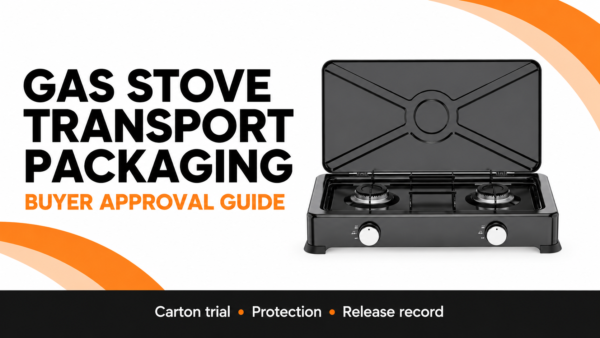
Black Model 6052 two-burner tabletop gas cooker with raised lid on a transport packaging approval guide cover

How to Approve Gas Stove Transport Packaging: A Buyer Trial and Release Guide

A gas stove can leave the factory in acceptable condition and still reach a distributor with a dented panel, loose knob, scuffed lid or broken retail box. The purchasing decision is therefore not whether a carton looks strong in a photograph. It is whether the exact product and pack-out proposed for the order have been documented, tried under an agreed handling plan, inspected afterward and released as a controlled production version. This guide gives importers, wholesalers and private-label teams a practical way to approve transport packaging before mass packing. It concentrates on the approval evidence: a versioned pack specification, a representative packed sample, a witnessed trial, an inspection record, a correction loop and a release decision. It does not claim that any carton style, material or test result is suitable for every route. The supplier and buyer must agree the trial conditions and pass criteria for the actual product, sales channel and shipping route. Quick Answers for Gas Stove Importers Buyer question Working answer Record to request What exactly am I approving? The appliance, accessories, inner protection, retail box, master carton, orientation and marks as one pack version. Versioned pack specification and photos. Is a carton photo sufficient? No. It cannot show how parts are restrained or how the packed appliance looks after handling. Open-box sequence and post-trial inspection. What test is required? Agree a route-appropriate trial and acceptance criteria with the supplier and any relevant buyer or logistics requirement. Do not assume a universal threshold. Signed trial protocol and result. Can an old model’s result be reused? Only after the changes in product, weight, pack geometry and components have been reviewed and documented. Change comparison and approval decision. When can packing start? After open issues are resolved and buyer and supplier identify the approved pack revision in the production

Read More »
ECOBRIDGE Model 6003 three-burner gas stove on the container loading guide cover

Gas Stove Packaging and Container Loading Guide

Compare gas stove shipping proposals by the cost and quantity that can actually be delivered and received. Begin with finished outer cartons and units per carton, build the proposed load, then price packing, transport and unloading together. Use container volume for an initial screen and book against the approved load plan. For an importer, the practical question is often whether to ship loose cartons, accept a palletized proposal or change the order mix. The answer depends on the packing hierarchy and the receiving operation as well as the ocean-freight quote. A low container rate can still produce a high cost per saleable unit when the proposed load carries fewer units or the warehouse cannot unload it as planned. The calculations below use identified ECOBRIDGE packing references and clearly labeled fictional cost exercises. Each example keeps the tabletop stove and built-in cooktop on separate order lines. Measure the finished outer carton The April 2026 ECOBRIDGE catalog gives three dimensions for Model 6003. It lists the appliance, its color box and an outer carton containing eight units. Use the figures on PDF page 4, printed page 06, as a reference when requesting measurements of the finished order. Model 6003 packing hierarchy Record Listed dimensions Calculated volume How the buyer should use it Appliance 577 × 278 × 53 mm 0.008501518 m³ Use for appliance dimensions. Color box 595 × 70 × 335 mm 0.01395275 m³ Use for the individual retail box. Outer packing carton 595 × 345 × 610 mm; 8 units 0.12521775 m³ per carton Starting point for the carton census and shipment-volume calculation. Divide the outer-carton volume by eight to obtain 0.01565221875 m³ per unit for this reference pack. Using the bare appliance volume instead would understate that per-unit outer-pack allowance by about 45.7%. Even using the color-box volume would

Read More »