
Market & Import Insights

Home / Blog / Market & Import Insights

Import routes, destination-market considerations, CKD and CBU decisions, tariff planning and commercial context for regional appliance programs.

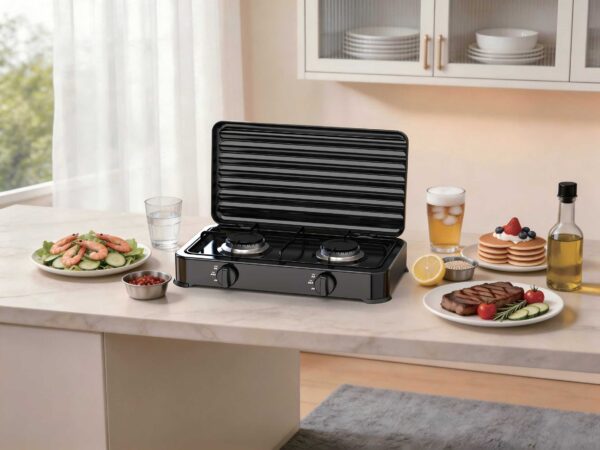
ECOBRIDGE Model 6003B black three-burner tabletop stove with raised ribbed lid beside a destination market supplier brief checklist

Gas Stove Destination Market Brief: A Supplier Input Checklist

Before asking a supplier to quote a gas stove for a destination market, identify the actual country of sale, intended use, exact product variant and the local inputs still awaiting confirmation. A shipping address and a request for a certificate leave important questions unanswered. The buyer’s decision rule is to give every market-dependent input a source, an owner and a status before treating the quotation as an offer for that market. A gas stove destination market brief connects what the importer needs with what the supplier must evaluate. This guide provides a reusable questionnaire, an evidence register and a supplier response format. It is for importers, distributors, wholesalers and private-label buyers preparing an RFQ. It does not prescribe country-specific law, establish product approval or replace qualified technical and destination-market review. Quick answers before sending the RFQ On a small screen, scroll the tables sideways to read all columns. Buyer question Working answer Input to supply Is the delivery country enough? Identify the country where the appliance will be sold and used, including onward distribution. Sales territory and receiving destination as separate fields Is “for Europe” a complete brief? No. Name each country and the product/use combination to be reviewed. One market line per proposed variant Can a catalog certificate image settle the inquiry? It can identify a document to request. Current status and applicability still need review. Complete current evidence and a model cross-reference Can the buyer leave gas inputs blank? Mark them pending and name the person who will confirm them; do not let a blank become an assumed specification. Confirmed local technical inputs or a precise open question When is the brief ready? When known inputs, unresolved items, owners and quotation assumptions are visible. Controlled brief revision and supplier response 1. Define the market beyond the delivery address
Read More »
import gas stoves from China

How to Import Gas Stoves from China: A Complete Guide for Importers

China offers importers a broad choice of gas stoves, flexible OEM options, and scalable production. However, a successful order depends on much more than finding the lowest unit price. To import gas stoves from China successfully, buyers must define market-specific requirements, verify compliance, control production, and plan customs clearance before placing a deposit. This guide covers the process for importers and private-label brands. Import Roadmap 01 Define specifications 02 Confirm compliance 03 Verify the factory 04 Approve a sample 05 Lock the contract 06 Inspect production 07 Ship and clear customs 08 Manage after-sales 1. Define Specifications Before You Import Gas Stoves from China Start with the destination market, not the supplier catalog. Gas types, supply pressures, installation methods, electrical systems, and consumer preferences vary by country. A model that works in one market may be unsafe or non-compliant in another. Your request for quotation should specify: Freestanding range, built-in cooktop, tabletop stove, or portable model LPG, natural gas, or approved conversion configuration Local gas category, inlet pressure, injector size, and required heat input Number and type of burners, ignition system, and flame-failure protection Panel material, pan supports, knobs, dimensions, voltage, plug, and power cord Branding, manuals, labels, retail packaging, carton strength, and spare parts Practical rule: Never ask only for “a four-burner gas stove.” A complete specification sheet prevents incorrect quotations, expensive redesigns, and certification delays. 2. Confirm Safety and Market Compliance Before Ordering Importers remain responsible for placing compliant products on their market. Therefore, confirm the applicable laws, standards, conformity assessment, labels, documentation, and local-language instructions before sample approval. Market Key Starting Point Importer Action European Union Regulation (EU) 2016/426 on appliances burning gaseous fuels; third-party conformity assessment and CE marking Verify the notified-body certificates, model identification, EU Declaration of Conformity, technical documentation, traceability labels, and required language

Read More »