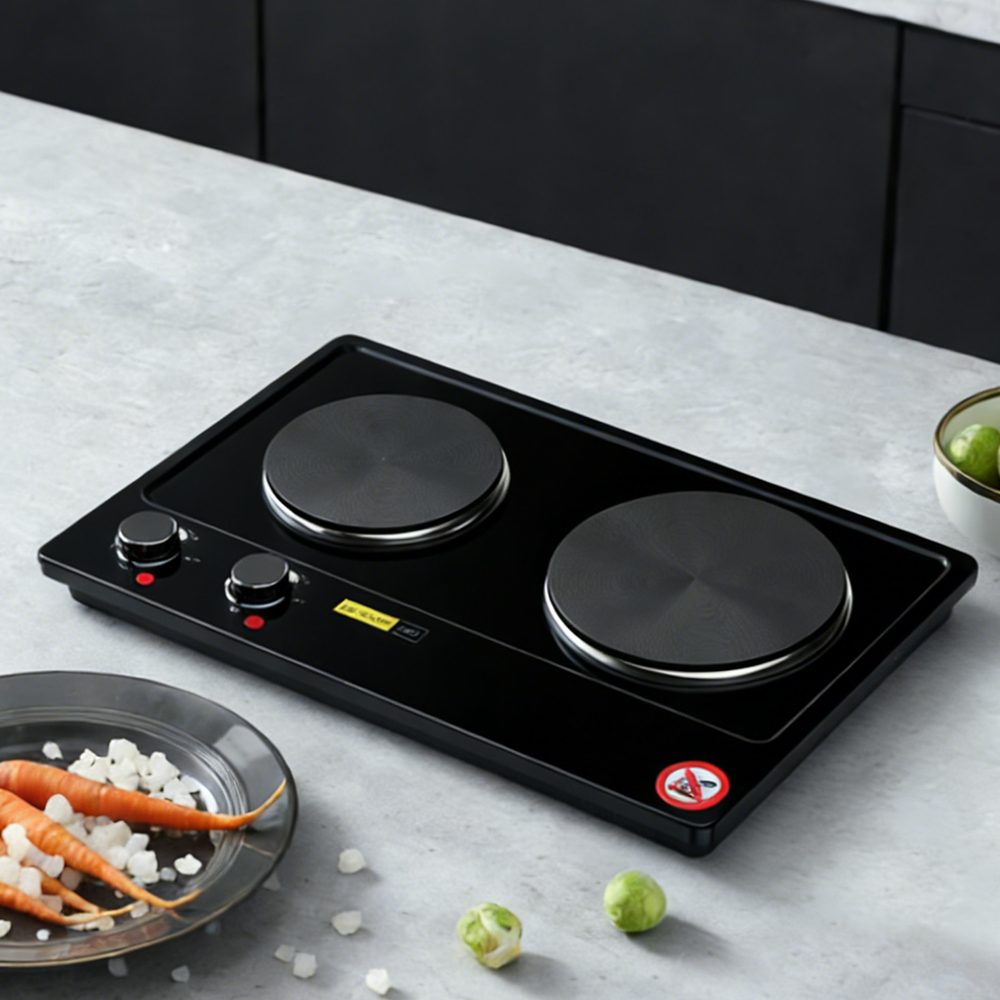
What is a hot plate? In today’s world, we look for tools that are both efficient and save space. A hot plate is a small, portable heating device. It turns any flat area into a place to cook. If you live in a small place or need more burners for a big event, this is perfect. It’s a great choice for those who need a reliable heat source but don’t want a big range. hot plate These units keep the temperature steady for boiling, simmering, or sautéing. By adding this appliance to your home, you can cook anywhere there’s an electrical outlet. Key Takeaways Provides a portable and efficient heating solution for various cooking needs. Functions perfectly as a secondary burner during busy holiday meal preparations. Ideal for small living spaces like dorms, studios, or tiny homes. Offers precise temperature management for consistent culinary results. Requires only a standard electrical outlet to begin cooking immediately. Defining the modern hot plate Today, the portable electric stove has changed a lot. It’s now a key part of many kitchens. Thanks to new tech, these stoves can heat up like big stoves but are much smaller. This means even small spaces can cook great meals. It’s a big change for cooking at home. Versatility in compact cooking The modern kitchen appliance can do many things well. It’s perfect for small places or big events. You don’t need a big stove to cook tasty meals every day. These stoves are very flexible. They let you cook more without taking up a lot of space. Here’s how they compare to big stoves: Feature Traditional Range Modern Hot Plate Portability None High Heat Control Standard Precision Energy Usage High Efficient Space Required Large Minimal The role of portable electric stoves in modern kitchens Adding a portable electric stove to your kitchen is smart. It’s safe and efficient, perfect for today’s fast-paced life. These stoves let you cook well, no matter how small your kitchen is. Choosing the right stove means you can cook like a pro, even in a small space. These stoves make cooking easier and better. They’re a great choice for anyone who wants to cook well at home. The evolution of portable cooking equipment The history of portable cooking equipment is truly fascinating. We’ve moved from simple heating wires to advanced systems. These changes show our need for easy cooking without losing meal quality. From primitive coils to advanced heating elements Early models used basic wire coils that glowed red. These were not very efficient, losing a lot of heat. Precision was nearly impossible with such technology. Now, we have advanced heating elements for quick and even heat. Modern cooking equipment uses ceramic glass and induction to save energy. This ensures heat goes exactly where it’s needed. “The shift in appliance design is not just about looks; it is about creating a seamless bridge between the user and the culinary process.” How design has shifted toward efficiency and aesthetics Today, appliances must look as good as they work. We’ve moved to sleek designs that fit modern homes. This focus on aesthetics doesn’t mean sacrificing function. Efficiency is key in our designs. We’ve added smart sensors and better insulation. This makes our tools use less power but perform better. Here’s a comparison of old and new systems. Feature Legacy Coils Modern Systems Heating Speed Slow Instant Energy Efficiency Low High Surface Design Exposed/Open Sleek/Flat Safety Features Minimal Advanced Sensors The evolution of cooking equipment shows our dedication to excellence. We keep improving these tools for today’s fast world. Understanding the core components of a hot plate The efficiency of your cooking experience depends on the core components of your hot plate. By looking at the internal parts, we can see how these devices turn electrical energy into heat for cooking. Heating elements and thermal conductivity The heart of every hot plate is the heating element. It’s the main source of heat. High-quality models use materials that heat up quickly to ensure the surface gets hot fast. When the element turns on, it must heat up the cookware quickly. This process depends on a few key things: Material composition of the heating coil or plate. Surface contact area between the burner and the pot. Insulation layers that prevent heat loss downward. Housing materials and heat resistance The outside of a hot plate must handle high temperatures and still be safe to touch. Manufacturers pick materials that are strong and protect from heat. Material Heat Resistance Durability Stainless Steel High Excellent Cast Iron Very High Superior Reinforced Plastic Moderate Good Using top-quality housing keeps the inside parts safe from damage. This durability is key for lasting performance in busy kitchens. Control interfaces and temperature regulation Modern control interfaces let you set precise temperatures for cooking. Whether you’re simmering a sauce or searing a steak, controlling your hot plate is crucial. Today’s circuitry ensures even power, avoiding hot spots or uneven cooking. With digital sensors and responsive knobs, you have full control over your cooking. This means you get professional results every time. Different types of hot plate technology Not all portable stoves are the same. Each heating technology has its own benefits for home cooks. Your choice depends on what matters most to you: budget, durability, or speed. Traditional coil burners These stoves use a metal heating element that glows red when on. They are known for being affordable and simple. The coils heat your cookware directly. However, they need regular cleaning to avoid food buildup. Despite this, they’re still popular for their reliability and ease of use. Solid cast iron plates For a tough appliance, solid cast iron plates are great. They have a flat, heavy-duty surface that holds heat well. This is better than open coils. They’re easy to clean because of their sealed design. They’re ideal for slow cooking where keeping a steady temperature is key. Modern induction cooktop systems The induction cooktop is the latest in kitchen tech. It heats cookware directly with magnetic fields. This is quick and saves energy. “The future of cooking is found in the precision and safety of magnetic energy, which transforms how we interact with our kitchen tools.” Since the surface stays cool, an induction cooktop is safer in small spaces. Many prefer it for its fast response, making it perfect for today’s fast-paced lives. Why a hot plate is a dorm room essential A compact burner is a must-have for students with tight budgets and small spaces. Living in a dorm, you often find that kitchen access is limited. A reliable, portable heating source lets you control your diet, even when you’re busy with school. Space-saving benefits for small living areas Living in a shared room means every inch counts. A good hot plate is incredibly compact, fitting on a desk or small shelf when not in use. This way, you can enjoy a warm meal without giving up space. Look for models with a low profile and non-slip feet for stability on uneven surfaces. Safety is key, so an automatic shut-off feature is a must. Adding this dorm room essential turns your study area into a mini kitchen. “The ability to prepare a simple, healthy meal in one’s own space is a fundamental part of maintaining balance during the stressful college years.” Budget-friendly meal preparation Dependence on campus dining or expensive takeout can empty your wallet fast. Cooking your own meals saves money and lets you choose what you eat. This dorm room essential pays off quickly, especially if you cook often. The table below shows how cooking at home can save you money compared to buying meals on campus. Meal Type Campus Dining Cost Home-Cooked Cost Weekly Savings Breakfast $8.00 $2.50 $38.50 Lunch $12.00 $4.00 $56.00 Dinner $15.00 $5.00 $70.00 Investing in a reliable burner gives you the freedom to cook when you want. It’s a smart choice for students looking to make the most of their resources and succeed in college. Industrial manufacturing and factory capabilities Every reliable burner comes from a top-notch manufacturing process. Our cooking equipment is made in state-of-the-art facilities. This ensures it meets the highest standards for safety and performance. Precision engineering in appliance production Our factory focuses on precision engineering. Every part is tested thoroughly. We know that small details are key to a product’s long life. By using automated lines and manual checks, we ensure each product works perfectly. This way, you get a reliable cooking equipment right away. Scaling production for global markets We’ve built the setup to meet global demand without losing quality. Whether it’s a small batch or a big order, our process stays the same. This means we can deliver cooking equipment to the U.S. and worldwide. Automated thermal testing for consistent heat output. Advanced material sourcing for heat-resistant housing. Streamlined logistics for timely global distribution. Customization options for commercial clients Commercial clients often need special solutions. Our team works with businesses to create unique designs. We offer custom branding and special interface setups for your cooking equipment needs. “True quality in manufacturing is not just about the final product, but the precision of the process that creates it.” — Engineering Lead, EcobridgeStove Quality control in the production of a countertop burner Creating a reliable cooking experience is our top goal. We focus on precision in making every countertop burner. Our strict protocols ensure our appliances meet top standards. This way, our products work safely and well in your kitchen. Testing for electrical safety and durability We check every unit for electrical safety to avoid risks. Our parts go through high-voltage tests to last through daily use. Durability is our main focus, so we test them like they’ve been used for years. “Quality is not an act, it is a habit.” Aristotle Our team checks the burner’s structure under extreme heat. This makes sure it stays stable and safe for you. We think thorough testing is key to keeping our customers’ trust. Ensuring consistent heat distribution Even heat is crucial for top cooking results. We use advanced sensors to check the heat of each element. This way, your food cooks evenly, avoiding cold spots or uneven browning. The table below shows our key checks during final inspection: Test Category Metric Target Standard Electrical Safety Insulation Resistance Pass (High Voltage) Thermal Output Heat Distribution Uniformity > 95% Durability Cycle Testing 10,000+ Hours We stick to these high standards to ensure every countertop burner works well. Our commitment to quality lets you enjoy cooking without worry. Safety standards for electric cooking appliances We think every kitchen appliance should be safe and work great. Our team uses the latest tech to make sure you’re safe while cooking. This means you can cook without worrying about safety. kitchen appliance Preventing overheating and fire hazards We add automatic thermal cut-off sensors to our designs. These sensors watch the temperature to stop overheating. If it gets too hot, they cut off the power to avoid fires. We also use strong, heat-resistant materials for the outside of our kitchen appliances. These materials stay cool, even when the appliance is working hard. This keeps everything safe inside and out. Regulatory compliance in the United States market We follow all the rules for making electric cooking gear. Our products pass tough tests to meet safety standards set by groups like Underwriters Laboratories (UL). This means our stuff is safe for use in the U.S. Keeping these high standards helps us give you appliances that last. We keep up with new safety rules to make sure our products are top-notch. We want you to feel safe and confident with our kitchen appliances. Choosing the right single burner stove for your needs Choosing a reliable countertop burner means knowing what you need. It’s about finding the right balance between your cooking habits and your kitchen’s space. This way, your new stove will fit perfectly into your life. Assessing power requirements and wattage The wattage of a single burner stove affects how fast it cooks. Most stoves have 800 to 1,500 watts. This speed can make a big difference in your cooking. But, think about your home’s electrical setup too. A powerful hot plate might overload your circuits if you’re using other appliances. Always check your outlets before buying a high-wattage stove. Portability versus stationary performance Choosing between a portable and a stationary stove depends on how you plan to use it. For camping or travel, a light, compact stove is best. It’s easy to carry and use on the go. “The best tool is the one that fits the task at hand, balancing raw power with the flexibility to move where the chef needs to be.” For a small apartment, a sturdy single burner stove is better. It has a solid base and can handle heat well. A stationary hot plate also offers better temperature control. Pick a stove that matches your cooking needs and kitchen setup. Maintenance tips for your induction cooktop Keeping your induction cooktop in top shape is easy with a few simple steps. Regular care helps protect the glass surface and keeps the electronics working well. Treat your cooktop with care to make it last longer. Cleaning surfaces without damaging components The glass on your cooktop is tough but can scratch if not handled right. Always wait for it to cool down before cleaning. Use a soft microfiber cloth and a gentle cleaner made for glass cooktops. Don’t use steel wool or rough cleaners, as they can harm the finish. For tough spills, a special scraper tool can safely remove them. Keeping the surface clean helps prevent heat buildup and ensures better energy use. Troubleshooting common operational issues Even the best induction cooktop might have small problems now and then. If it won’t turn on, first check the power cord and outlet. Often, a tripped circuit breaker is the cause. If you see error codes, check your manual for how to fix them. Many units have safety sensors that turn off if they sense overheating or wrong cookware. Using the right pots and pans is essential for good performance and avoiding sensor errors. Maintenance Task Frequency Recommended Action Surface Cleaning After every use Wipe with damp cloth Deep Cleaning Weekly Use glass-safe polish Ventilation Check Monthly Clear dust from intake Power Inspection Quarterly Check plug and cord Partnering with EcobridgeStove for custom solutions Building a successful brand needs reliable partners who get the kitchen appliance market. We invite you to work with us at EcobridgeStove. Together, we can create a top-notch single burner stove that fits your needs. Our team is all about helping your business grow with precise engineering and fresh designs. Our commitment to manufacturing excellence We focus on quality at every step to make sure our appliances are the best. We use the latest tech and strict tests to ensure each stove is safe and durable. Our dedication to quality means your customers get the best products out there. How to submit inquiries for wholesale and custom orders It’s easy to ask for what your business needs. Whether it’s bulk orders or a custom single burner stove, we’re here to help. Just contact us through our official channels to talk about your project, how many you need, and when you need them. Visiting EcobridgeStove.com for professional support Check out EcobridgeStove.com to see what we offer and how we can help. Our site has all the details on what we can do for you. Working with us means you get a team that’s all in for your success. Service Type Customization Level Primary Benefit Wholesale Supply Standard Fast Market Entry Custom Manufacturing High Unique Brand Identity Single Burner Stove Advanced Optimized Performance Conclusion Choosing the right cooking equipment changes how you use your living space. Whether it’s for quick meals in your dorm or for professional cooking, quality is key. We focus on precision and safety in our products. This ensures they meet the high standards of our users across the United States. At EcobridgeStove, we invite you to check out our latest products. We offer custom solutions that fit your needs and goals. Contact us today to talk about your next project. We’re excited to start a partnership that brings efficiency and performance to your kitchen. FAQ What exactly is a hot plate and how does it function in a modern kitchen? A hot plate is a handy kitchen tool that acts as a main or backup heat source. It’s small and reliable for tasks like boiling, simmering, and sautéing. They’re great for studio apartments or catering events where a big range isn’t needed. Why is a portable electric stove considered a dorm room essential for students? A portable electric stove is perfect for dorms because it saves space and money. Students can cook meals instead of eating out, which is cheaper. Our stoves are safe and efficient, perfect for small kitchens. What are the differences between traditional coils and a modern induction cooktop? Traditional coil burners use wire to heat up, while cast iron plates retain heat well. Induction cooktops, on the other hand, heat cookware directly with electromagnetic energy. They’re faster, more energy-efficient, and control temperature better than old methods. How does EcobridgeStove ensure the safety and quality of each countertop burner? At EcobridgeStove, we test every burner for safety, durability, and heat distribution. We follow strict US safety standards to prevent overheating and fires. This ensures our users can cook safely and worry-free. Can EcobridgeStove handle high-volume wholesale or custom manufacturing orders? Yes, our factory can handle big orders and custom requests. We ensure quality in every unit and offer custom options for businesses. For more information, visit EcobridgeStove.com. What factors should we consider when choosing a single burner stove? When picking a single burner stove, think about your power needs. High-wattage stoves are like traditional ranges, while lower-wattage ones are more portable. Choose based on your cooking needs and kitchen setup. How do we properly maintain and clean an induction cooktop? To keep your induction cooktop in top shape, clean the glass with special cleaners and soft cloths. Avoid damaging the electronics. For any issues, our troubleshooting guide can help fix minor problems quickly.

 English
  Spanish
  Portuguese
  French
  Dutch
Dutch  Bengali
  Russian
  Arabic