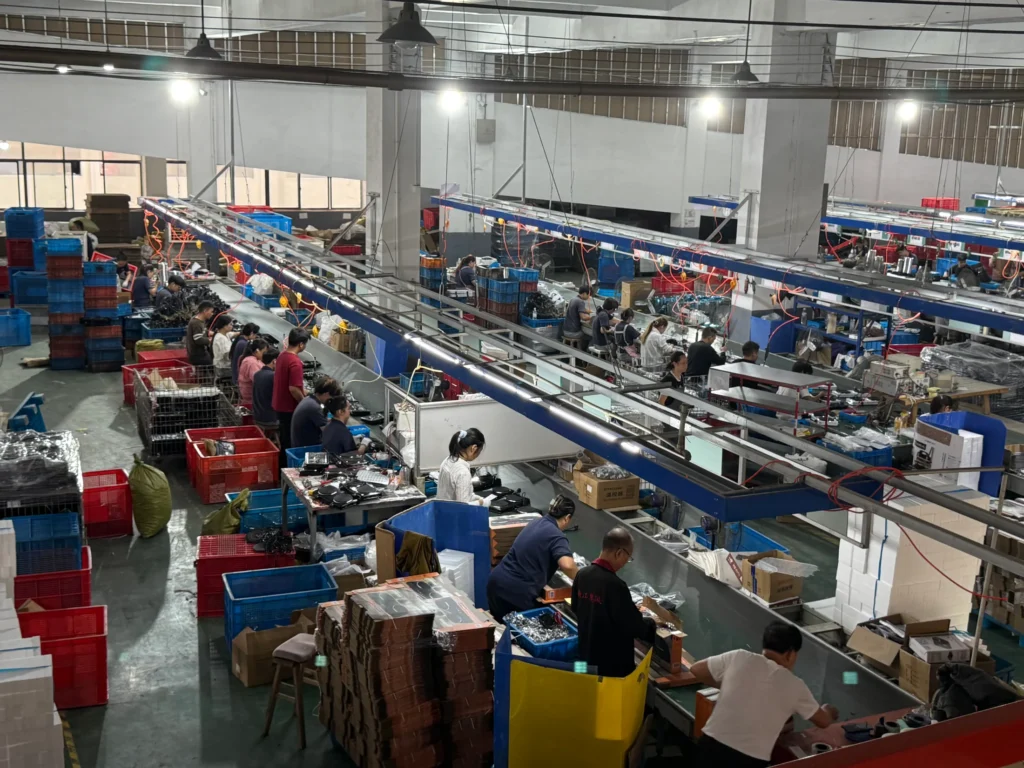
An elevated view of workers assembling electric hot plates on parallel AOFENG production lines
INSIDE AOFENG · ELECTRIC APPLIANCE WORKSHOP

Inside our electric hot plate workshop.

From formed housings to staffed assembly lines, see the manufacturing environment behind our electric cooking range—and the specification choices that make your finished SKU.

Electric hot plate assembly · AOFENG factory, Zhejiang
50,000 m²Factory facility
700Factory team members
250,000Units monthly production capacity
2009Manufacturing base established

Factory-wide figures confirmed by ECOBRIDGE. Model availability and order schedules are reviewed separately.

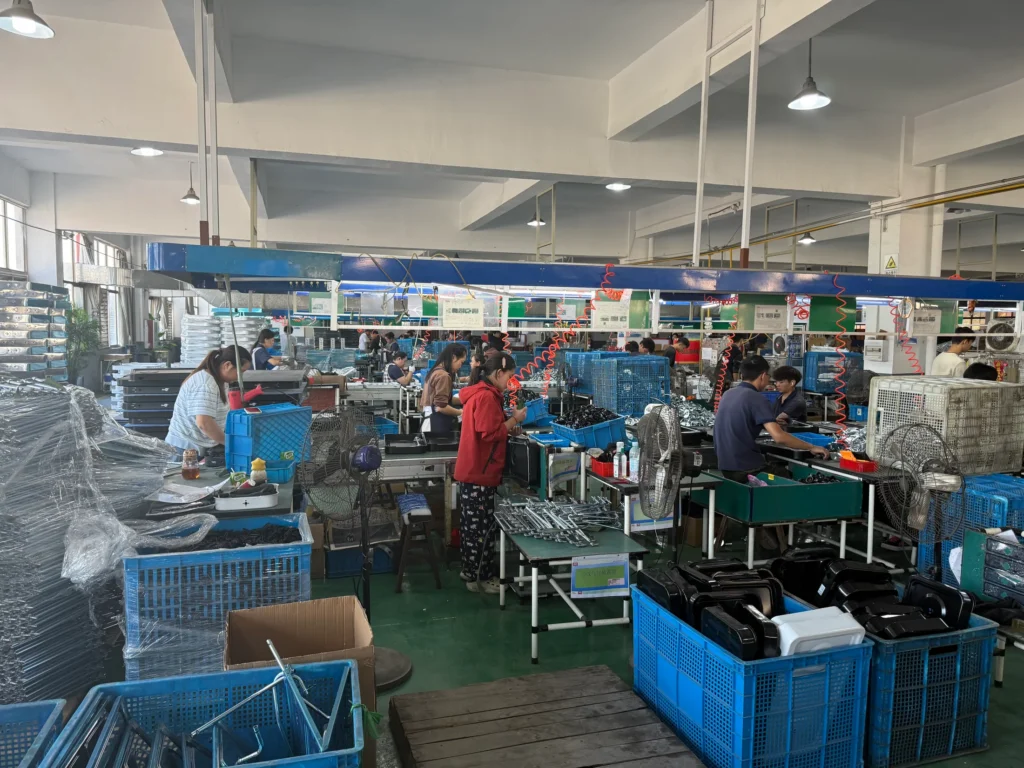
Electric hot plate assembly workers with black appliance housings and line-side components
Electric appliance assembly · people, housings and components on the line
ELECTRIC COOKING, BUILT AS A COMPLETE PRODUCT

The housing is only the beginning.

AOFENG’s electric hot plate workshop forms part of our cooking-appliance manufacturing base in Wuyi, Zhejiang. The new factory material shows metal-production areas, printed panels, staged components and active electric-appliance assembly lines. ECOBRIDGE supports international buyers selecting hot plates and developing private-label projects from this manufacturing operation.

A finished electric hot plate combines its housing, heating positions, controls, electrical components and supplied cable and plug. Its commercial identity also includes rated information, instructions, brand graphics and packing. A strong sourcing brief brings those decisions together instead of treating the visible housing as the whole product.

The workshop tour is designed to help you understand that connection. See the upstream metal work, look at how components are brought to the line, and use the configuration table to prepare a focused quotation request. Our team can then discuss the selected platform, market and documents with you.

REAL OPERATIONS · ORIGINAL FACTORY PHOTOGRAPHY

Look closer at the work behind the product.

The electric workshop combines upstream component work with product assembly. These photographs reveal the areas behind the finished electric cooking appliances in our range.

  1. 01Formed housings and panels
  2. 02Hardware and component preparation
  3. 03Panel graphics and branding
  4. 04Assembly at staffed stations
  5. 05Complete appliance configuration
  6. 06Packing and order preparation

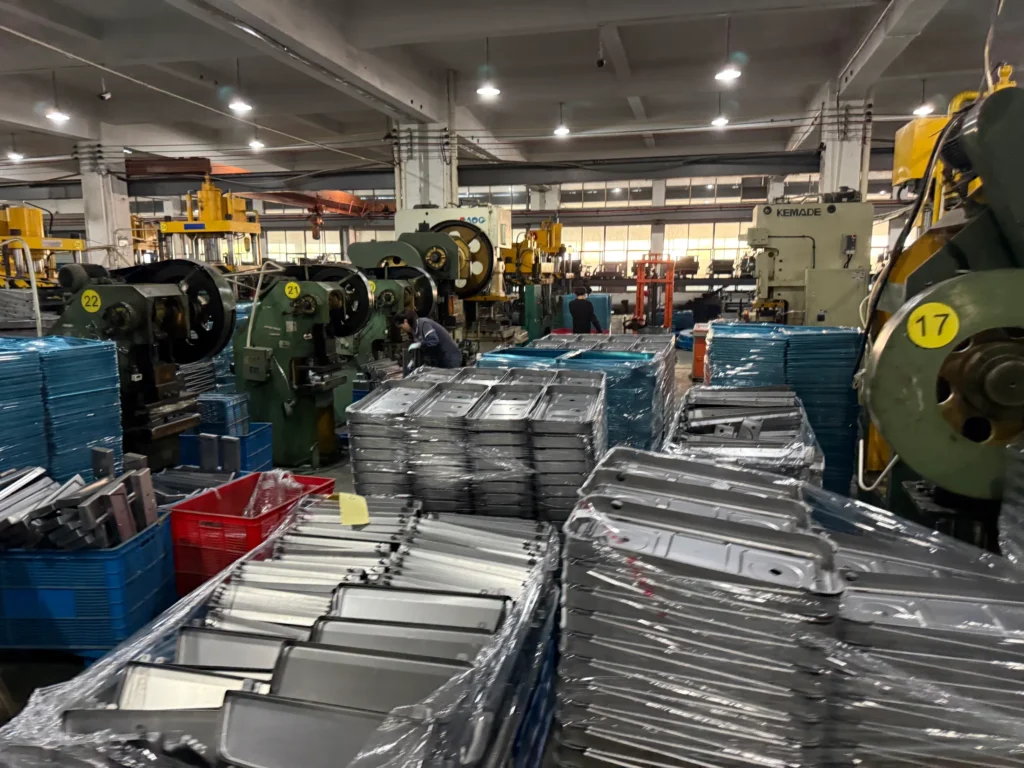
Formed housings and panels

Metal-production equipment forms the housings and panels used by the relevant appliance platforms. The new photographs show press stations, tooling and stacks of prepared components in the electric workshop collection.

The housing layout influences heating-position spacing, control placement and the finished footprint. For an OEM project, start with the platform dimensions and drawings before discussing a structural change or a different appearance.

Hardware and component preparation

The factory’s component work areas connect forming and fabrication with assembly. Prepared parts are grouped around production stations, ready for the operations required by the selected model.

For purchasing teams, the important connection is between those components and the approved product specification. Define the housing, fitted controls, feet or supports and included electrical parts as one model version.

Panel graphics and branding

The electric workshop collection includes a printing station used for appliance-panel graphics. Branding, control identification and the product’s visible presentation need to work together on the finished housing.

Approve artwork after the control layout is settled. The logo, relevant operating markings and product identification should be checked against the actual sample, while the rating information follows the agreed electrical configuration.

Assembly at staffed stations

Assembly combines prepared housings with the components and controls specified for the model. The workshop photographs show operators working along the lines with parts staged within the production area.

A hot-plate order needs the heating layout and electrical version identified clearly. Voltage, frequency, rated input, cable and plug are order details that should be established before production planning and artwork release.

Complete appliance configuration

The assembly floor shows the scale and organization of the work behind the final product. A complete SKU includes the appliance itself and the version-specific information that will travel with it to the destination market.

Match the approved sample with its control arrangement, identification and user information. Where a project includes a different plug, cable or other component, review the change against the relevant product file and evidence.

Packing and order preparation

The final commercial pack brings the finished appliance together with instructions, protection, accessories where included and carton information. Our factory-media collection includes packed cooking products in the warehouse and loading areas.

Confirm the packing quantity, master-carton dimensions and weights for the ordered version. Those details give buyers a useful basis for warehouse planning and container calculations before shipment.

Have a specific model in mind? Bring its reference, destination and quantity. We can focus the factory discussion on the version you plan to source.

Prepare Your Brief
THE FACTORY IN MOTION

See electric hot plate assembly at work.

A short workshop film follows the electric-appliance production floor, showing the movement and work behind the still images. Use it alongside the specification guide below.

Original AOFENG factory footage · October 2026 collectionSilent workshop film · English scene descriptions
Read the production overview

The metal-production floor: Equipment behind the appliance housing. Component fabrication: Workstations and prepared metal parts. Electric-appliance assembly: Operators working with the selected components. Assembly across the floor: A wider view of the workshop. Products and order preparation: Workstations, cartons and production activity. Connected manufacturing: Metal parts ready for the next operation.

FROM PRODUCTION TO PROCUREMENT

Define the electrical SKU before you compare price.

Two similar-looking hot plates can represent different electrical and commercial versions. Bring the following information into the model discussion so the quotation, sample and product files describe the same appliance.

Review Certificates & Reports ↗
Specification areaWhat to identifyWhy it belongs in the brief
Heating layoutNumber of positions, plate arrangement and intended cookware formatDefines the product family and footprint
Electrical ratingRated voltage, frequency and input for the selected versionConnects the product to the destination electrical supply
Cable and plugSpecified cable arrangement and destination plugForms part of the supplied electrical configuration
Controls and housingControl type, indicators where fitted, material and finishKeeps sample appearance and function comparable
Identification and manualsModel reference, rating label and required languagesKeeps market-facing information aligned with the appliance
Documents and packingApplicable model evidence, included items and carton dataSupports the import review and shipment plan
MANUFACTURING + PROJECT SUPPORT

Build your electric range around a controlled specification.

Electric hot plates give importers and appliance brands a distinct product route within the wider cooking range. The decision begins with the household need: heating positions, available counter space, cookware format and target market. Our hot plate collection provides the starting models; the workshop discussion connects those platforms to the electrical and commercial version you intend to buy.

For a private-label project, the brand presentation can be discussed together with the selected model, finish, control layout and packing. Send your artwork and language needs alongside the technical brief. The aim is to approve a complete product identity, so the rating information, instructions, visible graphics and carton all refer to the same version.

Our certificate and report library includes electric hot-plate files such as CB, electrical-safety and EMC documentation. Their scope is defined by the source documents and listed models. Use the library to identify the relevant files, then ask our team to match the current evidence to the exact configuration and destination you are reviewing.

A factory visit is also an opportunity to agree the inspection discussion for your project. Identify the model-specific functional and electrical checks, appearance expectations, documentation and packing review required before release. The manufacturing photographs show work areas and activities; test conditions and acceptance requirements should be established in the product and inspection files.

AOFENG’s 50,000 m² factory, 700-person team and monthly 250,000-unit capacity describe the overall operation across the factory. Hot-plate availability and production timing depend on the selected models, quantities, components and approval status. Send the intended model mix and shipment window for a project-specific discussion.
Press equipment and prepared panels in the electric workshop collection
An elevated view across electric-appliance assembly lines
Compact cooking appliances displayed in the factory sample room
QUESTIONS FROM INTERNATIONAL BUYERS

Know the factory.
Plan the next step.

What can I see in the electric hot plate workshop?

The original factory collection shows metal-production equipment, prepared housings, a printing station and staffed electric-appliance assembly lines. The page follows those operations with photographs and a short workshop film.

Which details are needed for a hot plate quotation?

Send the selected model or heating layout, destination, voltage, frequency, rated input, cable and plug needs, quantity, branding and packing requirements. Add any required product documents so the team can review the relevant version.

Can I use my own brand and packaging?

Yes, private-label requirements can be discussed for the selected platform. Provide logo files, desired panel presentation, label and manual languages, and carton artwork needs. Final scope is agreed around the product and order.

Is every hot plate suitable for every voltage or plug?

No. Electrical ratings and the supplied cable and plug belong to the exact product version. Confirm them in the model specification and relevant documents rather than inferring them from a photograph.

Where can I review hot plate certificates and reports?

Use the Certificates & Reports page to review the available electric hot-plate files. The listed models and source-document scope determine which evidence applies; our team can help connect those files to your selected SKU.

Can I arrange a focused electric workshop tour?

Yes. Send your preferred models, company, market and visit dates. Tell us whether your main interest is housings, printing, assembly, samples or packing so the discussion can focus on the relevant operations.

FROM FACTORY TOUR TO YOUR NEXT ORDER

Turn your hot plate idea into a precise factory brief.

Bring your market, electrical requirements and model preferences. We’ll help you move toward the right sample and OEM discussion.

  • Model selection and destination configuration
  • OEM/ODM appearance and packaging discussions
  • Factory visits and focused video-tour requests
  • Samples, documentation and order planning

Prepare your factory inquiry.

A few details help us make the discussion specific to your project.

Email opens your email application with this brief. You can also use our full inquiry form.

Factory media: original October 2026 photographs and video. Manufacturing base: Wuyi, Zhejiang, China. Meet AOFENG & ECOBRIDGE.Back to top ↑